
Fast Fashion Explained for Parents: How to Reduce Its Impact

Fast fashion is everywhere. New clothing collections appear every few weeks in stores and online. Children want the trendy sweater, teenagers ask for the latest brand, and parents often end up buying more clothes than necessary.
This phenomenon has a name: fast fashion.
But behind the low prices and endless choices lies a growing problem: the environmental and social impact of fast fashion.
The good news? Parents can play a powerful role in helping their families adopt more sustainable clothing habits.
What Is Fast Fashion?
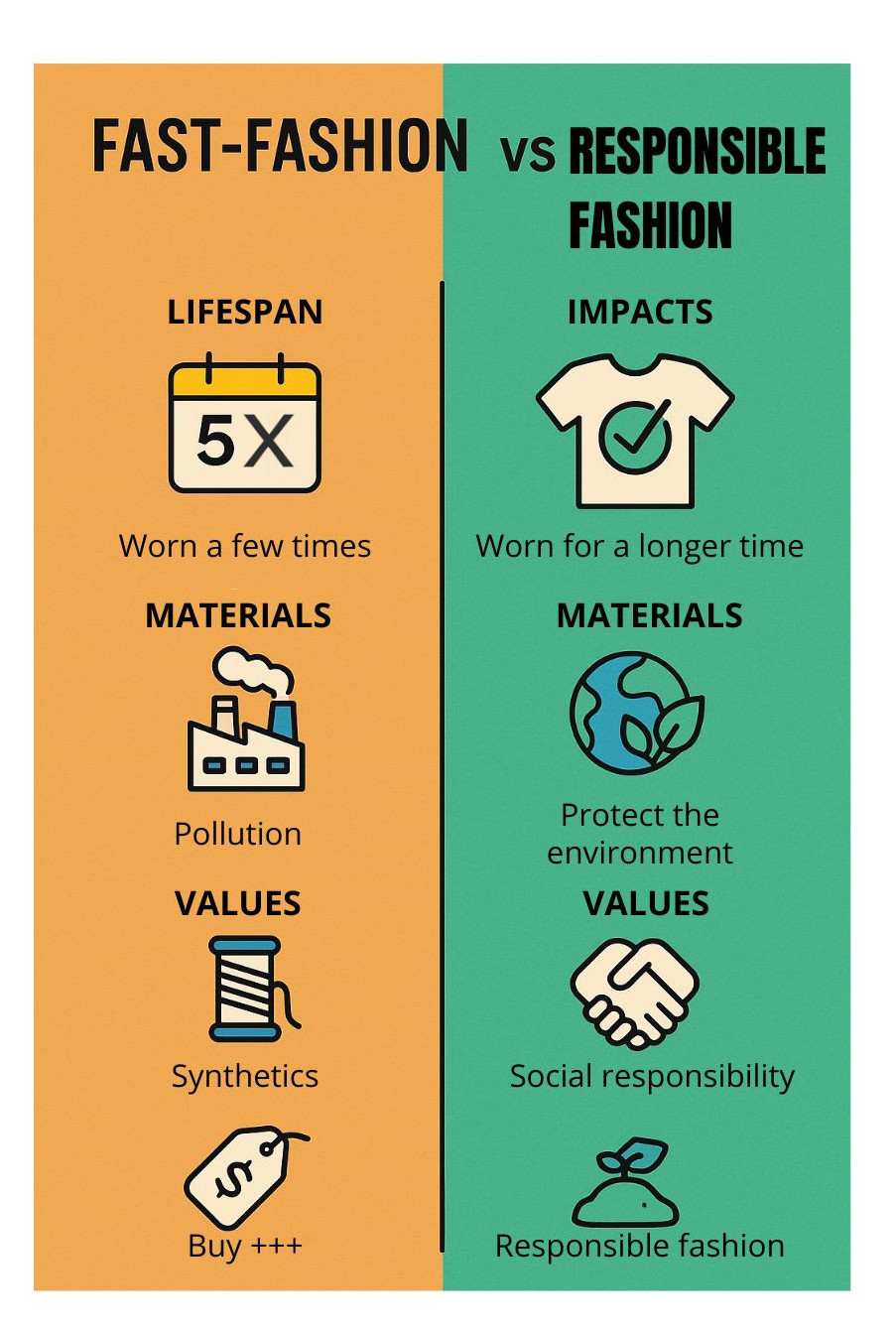
Fast fashion refers to the mass production of inexpensive clothing designed to follow trends quickly.
Major clothing brands release new collections constantly to encourage consumers to buy more.
Key characteristics of fast fashion include:
- New clothing collections every few weeks
- Low prices that encourage frequent purchases
- Clothing made from lower-quality materials
- Short product life cycles
Because of this model, clothes are often worn only a few times before being discarded.
The Environmental Impact of the Fashion Industry
The global fashion industry has a major environmental footprint.
Water consumption
Producing clothing requires enormous amounts of water. For example:
- A single pair of jeans can require up to 9,000 litres of water to produce.
Water pollution
Textile dyeing is one of the largest sources of water pollution worldwide.
Greenhouse gas emissions
The fashion industry is responsible for around 10% of global carbon emissions, more than international aviation and shipping combined.
Microplastic pollution
Synthetic fabrics such as polyester release microplastics during every wash, which eventually enter rivers and oceans.
The Social Impact of Fast Fashion
Fast fashion also raises serious concerns about labour conditions.
Many garments are produced in countries where workers:
- receive extremely low wages
- work long hours and face unsafe working conditions
These issues highlight the hidden human costs behind cheap clothing.
How to Explain Fast Fashion to Children
Talking about sustainability with children can be simple.
Parents can explain that:
- clothes travel long distances before reaching stores
- clothing production uses water, energy, and natural resources
- buying fewer clothes helps protect the planet
Involving children in activities such as sorting clothes or participating in clothing drives helps them understand that their choices matter.
How Families Can Reduce Fast Fashion
Adopting more sustainable clothing habits does not require drastic changes. Small actions can make a big difference.
Buy Less but Choose Better
Instead of purchasing many low-quality items, families can choose durable, higher-quality clothing.
Look for natural or sustainable materials such as:
- organic cotton
- linen
- wool
- recycled fabrics
Choose Second-Hand Clothing
Buying second-hand clothes is one of the best ways to reduce the environmental impact of fashion.
Options include:
- thrift stores
- clothing swaps with friends
- online resale platforms
Today, second-hand fashion is affordable, trendy, and environmentally responsible.
Repair and Reuse Clothing
Instead of throwing clothes away:
- sew a button back on
- repair small tears
- transform an old pair of jeans into a bag
- use a worn t-shirt as pajamas
These small steps help reduce textile waste.
Donate Clothing Through Local Programs
Donating to local clothing drives is also a great option.
Programs such as Les Super Recycleurs make it possible to:
- recycle clothing
- support schools
- fund community projects
It’s a tangible way to get children involved in doing something positive for the planet.
Parents Lead by Example
Children learn by watching their parents.
When families show that:
- clothing can last for years,
- thrift shopping is normal,
- repairing clothing is valuable,
they teach children important lessons about responsibility and sustainability.
Toward More Sustainable Fashion
Fast fashion may dominate the market, but it does not have to dominate our choices.
Parents can make a real difference by:
- buying fewer clothes
- choosing higher quality items
- supporting second-hand fashion
- donating and recycling clothing
The next time you consider buying a cheap sweater, ask yourself one simple question:
Do I really need it?
Reducing fast fashion means protecting the environment, supporting fair labour practices, and creating a more sustainable future for our children.
Here are a few links to listen to or read about fast fashion and its impact:
- La «fast fashion»: du style pas cher, au détriment de l’environnement | Journal Le Devoir
- Franceinfo a visité des usines et les ateliers Shein
- Comment des stocks de vêtements Shein finissent dans le désert au Chili
- Face à la fast fashion, et si on repensait notre façon de s’habiller ?
- Toxicité des vêtements : une experte a répondu à vos questions